Thanksgiving is a time for family, delicious food, and celebration. If you have a dog, it’s important to know which holiday foods are safe to share and which can be dangerous. Follow Home for Good Dog Rescue’s dog-friendly Thanksgiving tips to make sure your pup enjoys a fun, safe, and tail-wagging holiday!
Safe Thanksgiving Foods for Dogs
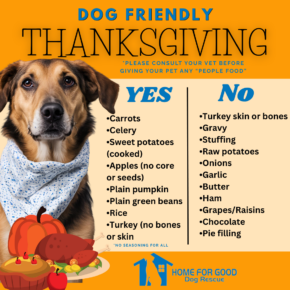
You can safely offer your dog small, plain portions of the following healthy holiday treats:
-
Turkey: Lean, unseasoned white meat only. Always ensure it is completely boneless and skinless.
-
Sweet Potatoes & Pumpkin: Plain, cooked sweet potato or 100% pure canned pumpkin puree (great for digestion!).
-
Green Beans & Carrots: Plain, raw, or steamed vegetables with no added salt, butter, or seasoning.
-
Apples: Fresh slices with all seeds and the core completely removed.
-
Plain Cooked Rice: Easy on the stomach and simple to digest.
High-Risk Foods to Keep Away From Your Dog
Certain traditional Thanksgiving ingredients are toxic or hazardous to pets. Avoid letting your dog eat:
-
Turkey Skin, Bones & Gravy: High fat content can trigger severe pancreatitis, and cooked bones can splinter and puncture the digestive tract.
-
Onions, Garlic, Shallots & Leeks: Destroy red blood cells and can cause dangerous anemia in dogs.
-
Stuffing & Casseroles: Packed with high sodium, heavy fats, onions, and garlic.
-
Sugar-Free Baked Goods & Peanut Butter: Often contain Xylitol (birch sugar), which is extremely toxic to dogs even in minute amounts.
-
Raisins & Grapes: Can cause acute kidney failure.
-
Chocolate, Desserts & Alcohol: High in toxins and sugar that can cause rapid illness.
Quick Emergency Contacts
Keep your local emergency vet clinic’s phone number handy over the holiday weekend.
Veterinary & Health Disclaimer: The information provided in this guide is for educational purposes only and is not a substitute for professional veterinary medical advice. Every dog has unique health needs, sensitivities, and dietary restrictions. Always consult your veterinarian before introducing new foods or treats to your dog’s diet.
Loved this guide? Help us keep every pup safe this holiday season! Share this article with fellow dog parents on Facebook and Instagram, and leave a comment below sharing your dog’s favorite safe holiday treat!


