Halloween Dog Safety Tips: The Ultimate Rescue Guide
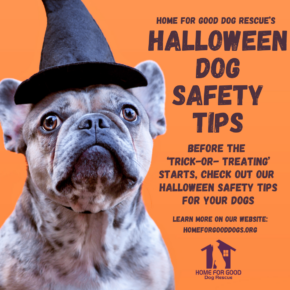
Halloween is a festive and exciting time of year, but the spookiest season also brings a unique set of hazards for our four-legged family members. Between constant doorbells, dangerous treats, and costume mishaps, following proper Halloween dog safety tips ensures the festivities stay safe and fun for pets and owners alike.
At Home for Good Dog Rescue, pet safety is at the heart of our mission. Use and share this comprehensive guide to keep your dogs calm, safe, and happy all spooky season long.
1. Keep Halloween Treats Strictly Out of Reach
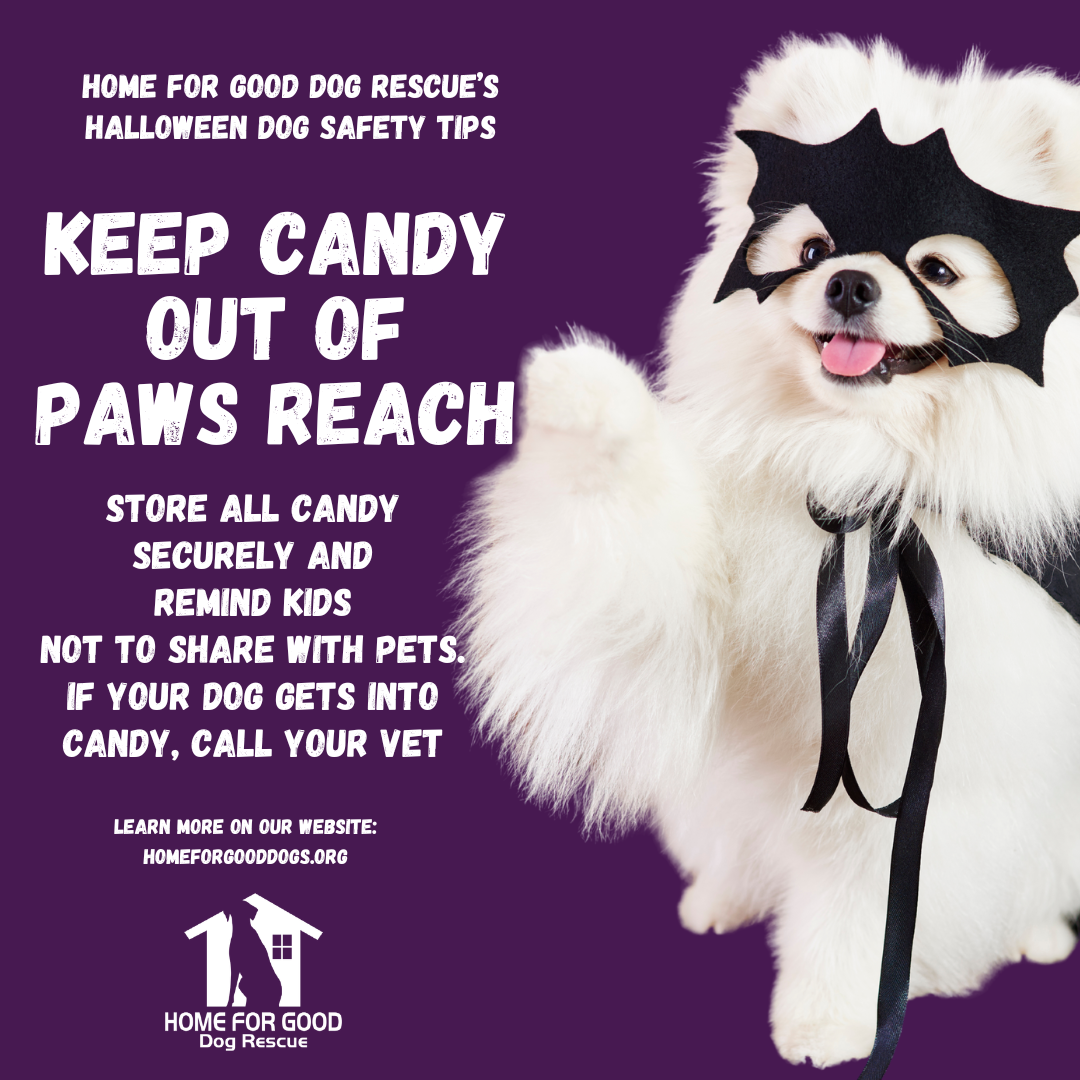
Candy is meant for trick-or-treaters, never pets. Many common treats pose severe health risks to dogs:
-
Chocolate & Xylitol: Dark chocolate, baking chocolate, and sugar-free treats containing Xylitol (birch sugar) are toxic to dogs and require immediate veterinary attention.
-
Raisins & Wrappers: Raisins can cause acute kidney failure, while plastic, foil, and cellophane wrappers pose dangerous intestinal blockage risks.
Pro-Tip for Households: Keep all trick-or-treat bowls on high surfaces or inside closed pantries, and remind children never to share their haul with pets.
2. Dog Costume Safety and Comfort
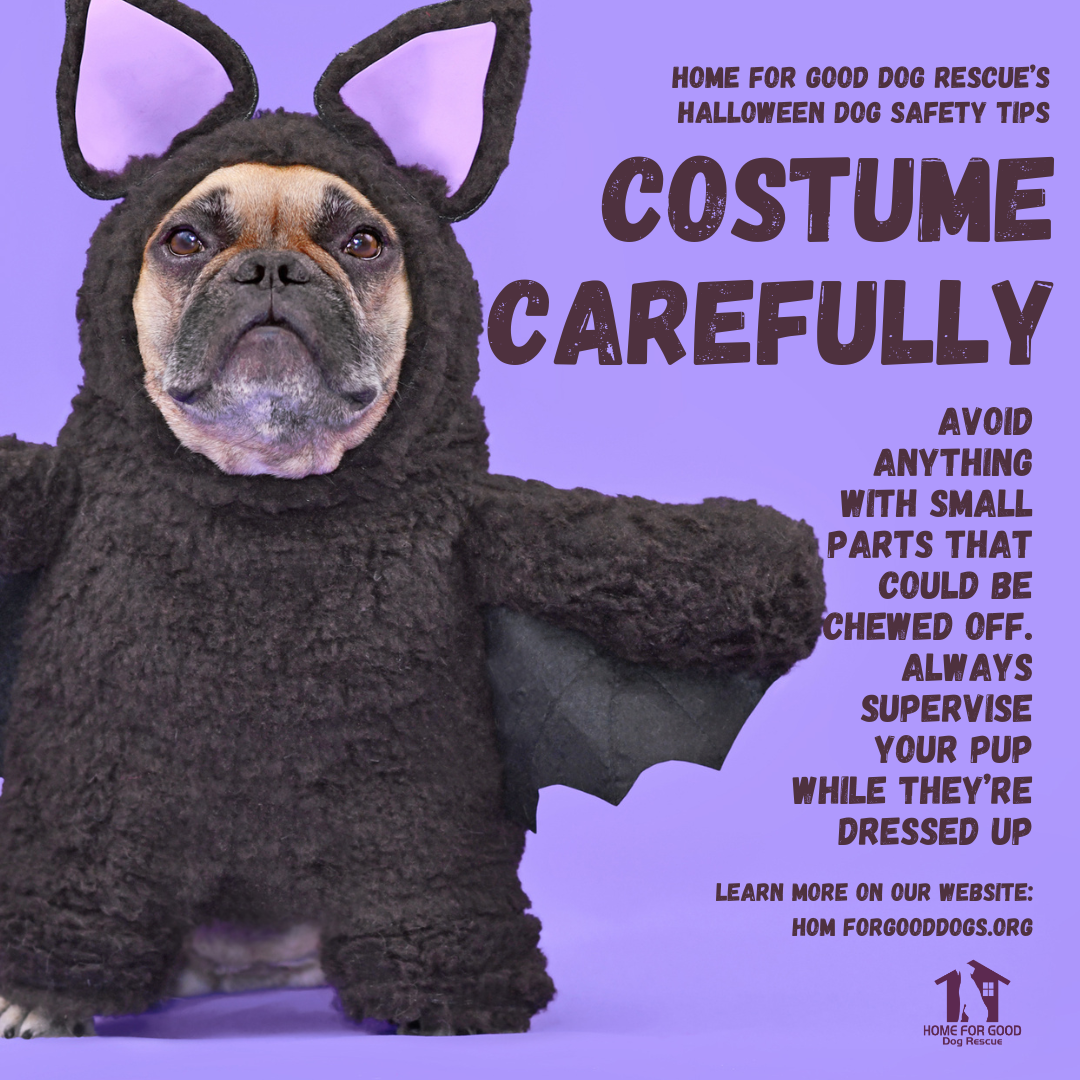
Dressing up your dog can be adorable, but safety and comfort must come first.
-
Ensure Full Mobility: Select costumes that do not restrict your dog’s breathing, vision, hearing, or movement.
-
Watch for Choking Hazards: Avoid outfits with small buttons, beads, dangling strings, or snaps that dogs could chew off and ingest.
-
Test Run & Stress Check: Let your dog wear the costume for short periods ahead of Halloween night. If they exhibit signs of distress—such as freezing, panting, rolling, or trying to bite at the outfit—opt for a simple festive bandanna instead.
3. Secure the Front Door to Prevent Escapes
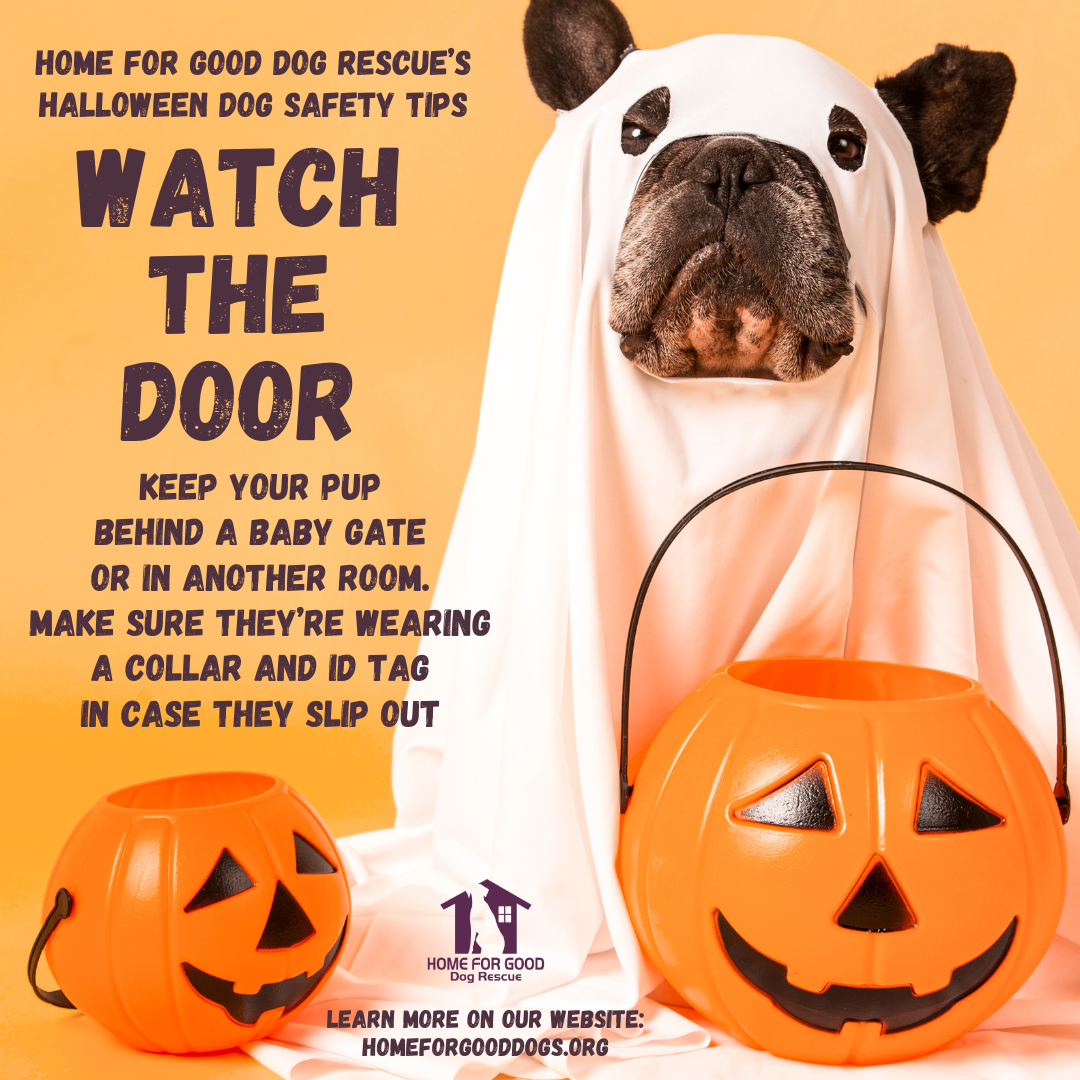
With trick-or-treaters arriving throughout the night, the constant opening and closing of the front door creates a major escape risk for spooked pets.
-
Set Up a Safe Zone: Keep your dog secured in a comfortable back room equipped with their bed, favorite toys, water, and white noise or music to block out doorbells.
-
Double-Check Identification: Ensure your dog’s ID tags and microchip contact details are completely up to date ahead of time.
4. On-the-Go Halloween Dog Safety Tips
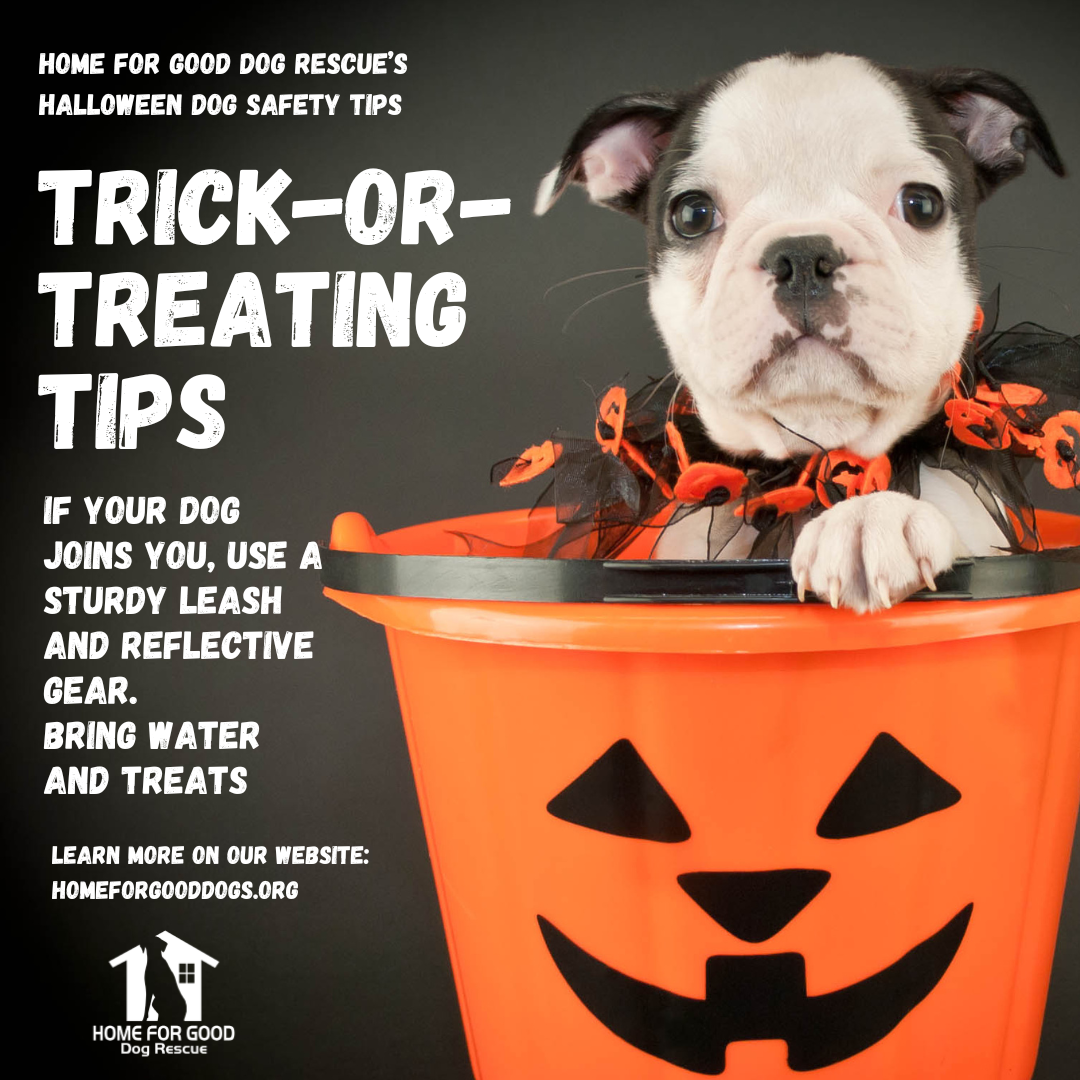
If your dog is joining the neighborhood walk, take extra precautions:
-
Use Secure Gear: Equip your dog with a sturdy, well-fitted harness and a standard 6-foot leash (avoid retractable leashes). Add reflective gear or a clip-on LED light to their collar for nighttime visibility.
-
Monitor Stress Levels: Crowds, loud noises, and strange figures in costumes can trigger anxiety or reactivity even in easygoing dogs. Watch for warning signs like excessive panting, lip-licking, or pulling on the leash. If your dog shows signs of stress, head back home immediately.
5. Decorate with Pet Safety in Mind
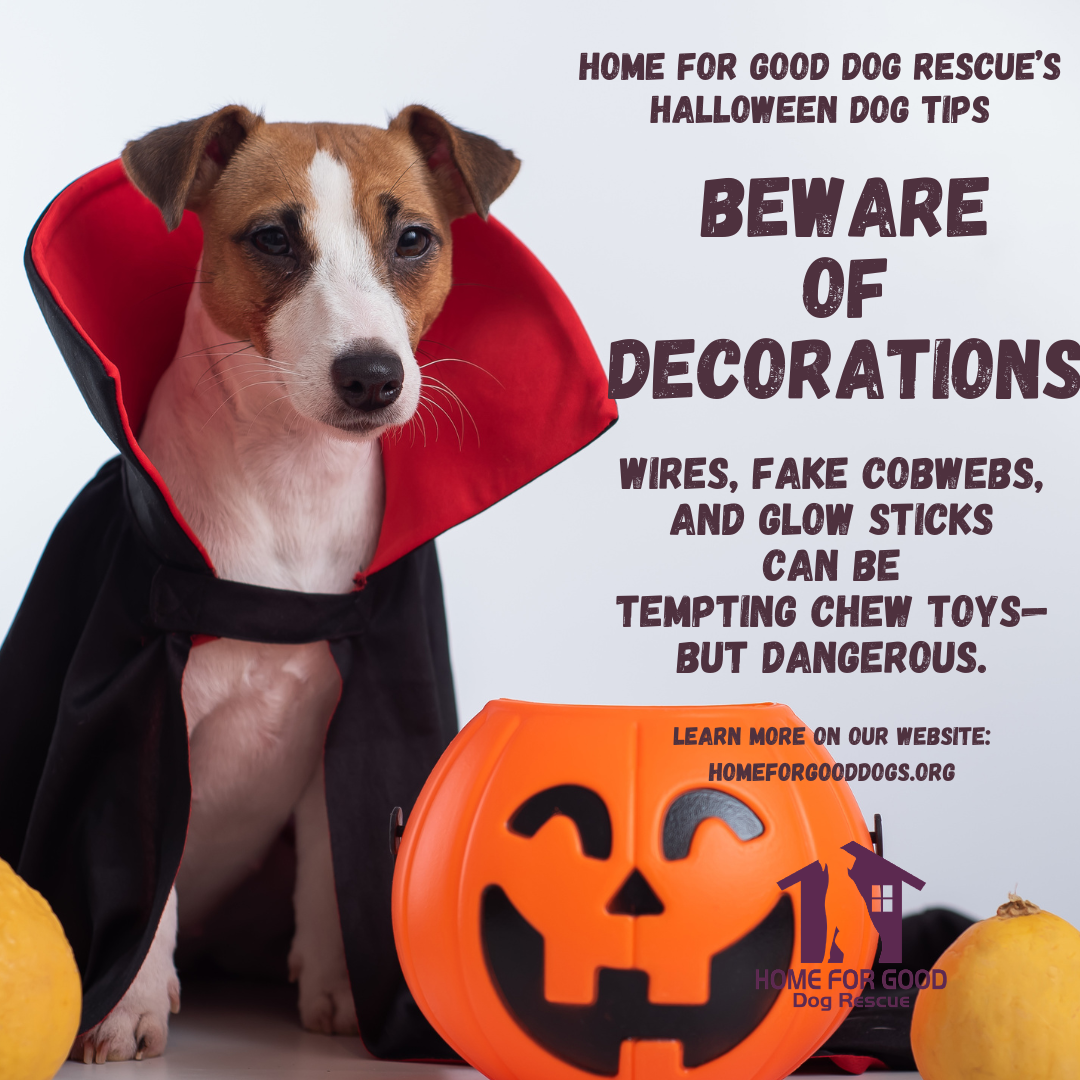
Spooky decor can tempt curious paws and noses:
-
Ditch Real Candles: Avoid open flames inside Jack-o’-lanterns or candleholders. Switch to battery-operated flameless candles to prevent accidental burns or fire risks.
-
Conceal Cords & Wires: Keep electrical cords for fog machines, lights, and animated props tacked down or covered to prevent chewing and shock hazards.
A Safe Halloween Is a Happy Halloween
By taking a few proactive steps, you can protect your pets from seasonal dangers while enjoying all the Halloween fun. If you’re looking to help more dogs in need this season, check out our foster program or learn about our adoption process.
Are you a fellow rescue, shelter, or dog owner looking to spread the word? Feel free to share these tips to help keep pets safe across your community!
Disclaimer: The safety tips provided in this article are for informational and educational purposes only and do not constitute professional veterinary or behavioral advice. Every dog is an individual with unique needs and health requirements. Always consult your licensed veterinarian or a certified professional dog behaviorist for specific advice regarding your pet’s medical condition, diet, or behavior.


