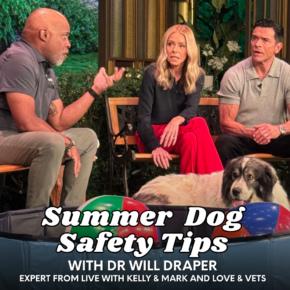
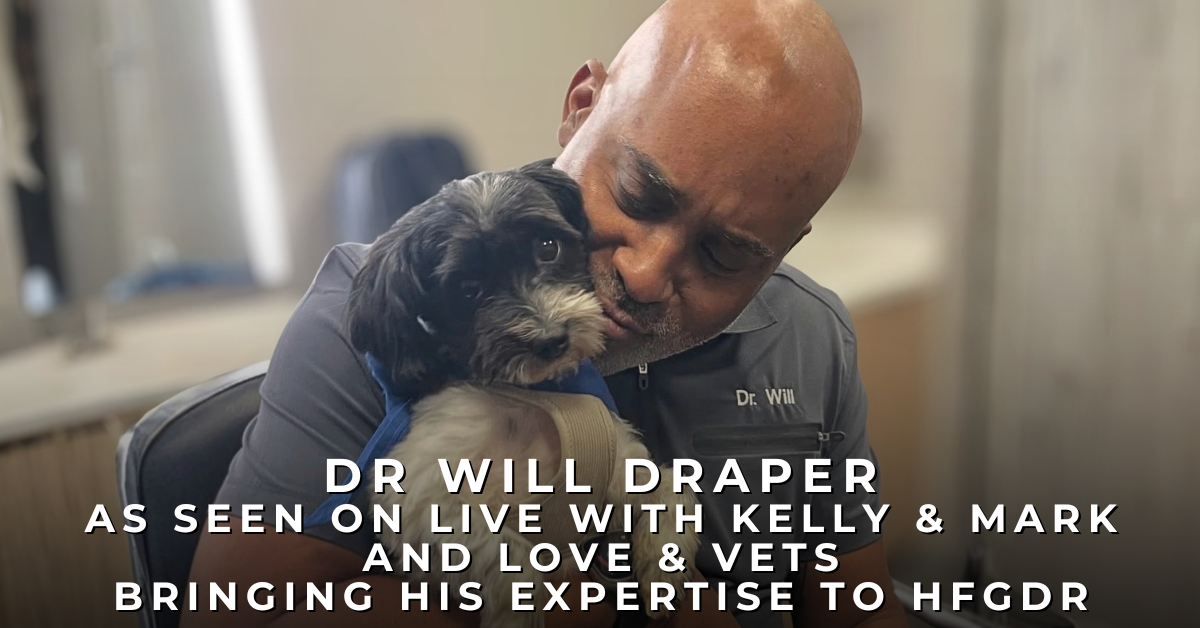
Summer dog safety tips are coming directly to the Home for Good Dog Rescue community — straight from our veterinary friend, Dr. Will Draper. Dr. Draper is the founder and director of The Village Vets in metro Atlanta, a nationally recognized veterinary expert, and a familiar face to fans of Live with Kelly and Mark and Disney+’s Love and Vets. He is now lending his expertise to the rescue community, and this is where it starts. Five of our rescue pups — Chai, Harper, Mellow, Murray, and Sangria — joined him on the Live with Kelly and Mark set earlier this year, and his message that day was too important not to share. Here is what Dr. Draper wants every dog owner to know before summer peaks.
1. Heat Affects Dogs Faster Than You Think
Dogs cannot sweat the way humans do. Instead, they rely almost entirely on panting to regulate their body temperature — and panting alone is not always enough. Therefore, when temperatures climb above 80°F, your dog is already working harder than you realize just to stay cool. Dogs with short snouts, such as bulldogs and pugs, are at even greater risk because their airways make effective panting more difficult. Senior dogs, overweight dogs, and dogs with thick double coats are also more vulnerable. Even a few minutes of overexertion in the heat can tip a dog into dangerous territory.
2. Time Your Walks Strategically
One of the simplest changes you can make is adjusting when you walk. Early morning — before 9 a.m. — and late evening — after 7 p.m. — are the safest windows. Additionally, the pavement test is your best friend: press the back of your hand flat on the asphalt for seven seconds. If it burns your hand, it will burn your dog’s paw pads. Concrete and asphalt can reach temperatures 40–60°F hotter than the air around them on a sunny day. Grass and shaded dirt paths are always the better choice.
3. Never Leave Your Dog in a Parked Car
This point cannot be overstated. Even on a mild 70°F day, the interior of a parked car can reach over 100°F within 20 minutes. Cracking the windows makes almost no difference. Consequently, if your dog cannot come inside with you, they are safer at home. There is no errand worth that risk.
4. Hydration Is Everything
Fresh, cool water should be available to your dog at all times — indoors and out. Moreover, if you are heading somewhere without reliable water access, bring your own. Collapsible travel bowls are inexpensive and easy to keep in a bag or car. Signs of dehydration include dry or sticky gums, sunken eyes, and lethargy. When in doubt, offer water and get to a shaded spot immediately.
5. Watch for These Heat Stroke Warning Signs
Heat stroke is a medical emergency. Recognizing it early can save your dog’s life. Watch for:
- Heavy, labored panting that does not slow down
- Excessive drooling or thick, ropy saliva
- Bright red or very pale gums
- Vomiting or diarrhea
- Stumbling, weakness, or confusion
- Collapse
If you see any of these signs, move your dog to a cool area immediately, apply cool (not ice cold) water to their paws, groin, and neck, and get to a veterinarian as fast as possible. Do not use ice — it can cause blood vessels to constrict, which actually slows cooling.
6. Skip the Summer Shave
Shaving your dog’s coat may seem like a logical way to help them stay cool, but it often works against you. For many breeds, the double coat actually provides insulation against both heat and sunburn. A shorter trim is fine for some dogs, but a full shave can expose sensitive skin to UV damage and disrupt the coat’s natural temperature regulation. Ask your groomer or veterinarian what is right for your specific dog’s coat type before making that call.
7. Your Complete Summer Dog Safety Tips Start Here
These summer dog safety tips are a starting point — not a substitute for knowing your own dog. Every dog is different. Some handle heat better than others. Air conditioning is the gold standard for keeping dogs cool at home, but not every home runs AC all day. Fortunately there are other ways to help. Cooling mats, available at most pet stores, absorb body heat and stay comfortable for hours. A small fan positioned at dog level makes a surprising difference. Similarly, a kiddie pool or sprinkler in the yard gives dogs a way to self-regulate on hot days. Keep your dog’s resting area away from south-facing windows that trap heat throughout the afternoon.
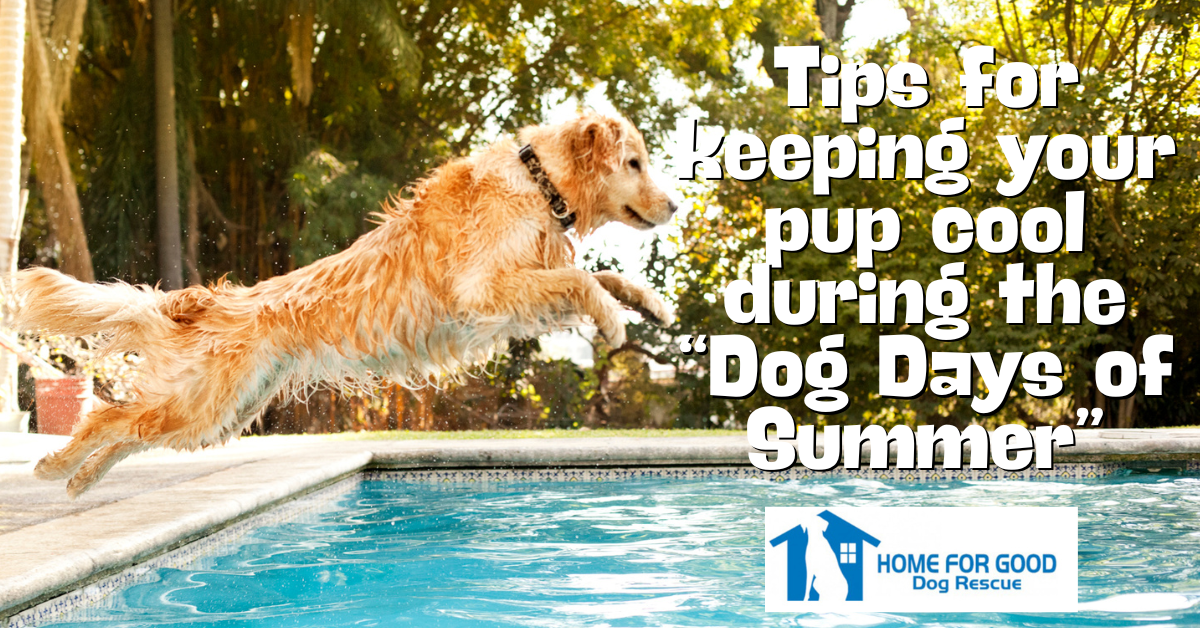
Keep these tips handy all season long. Share them with every dog owner you know — because every dog deserves a safe and happy summer.
The information provided in this post is intended for general educational purposes only and is not a substitute for professional veterinary advice, diagnosis, or treatment. Every dog is different, and what works for one may not be appropriate for another. Always consult your veterinarian before making changes to your dog’s routine, especially during extreme heat. If you ever have concerns about your dog’s health or well-being, contact your veterinarian immediately.