
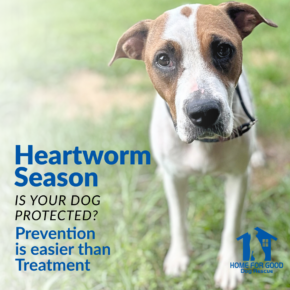
Heartworm prevention becomes urgent once mosquito season starts. It only takes one bite to infect an unprotected dog. Mosquitoes are the only way heartworm spreads, and warmer months bring more of them. If your dog isn’t on a preventative yet, now is the time to start.
What Heartworm Actually Does
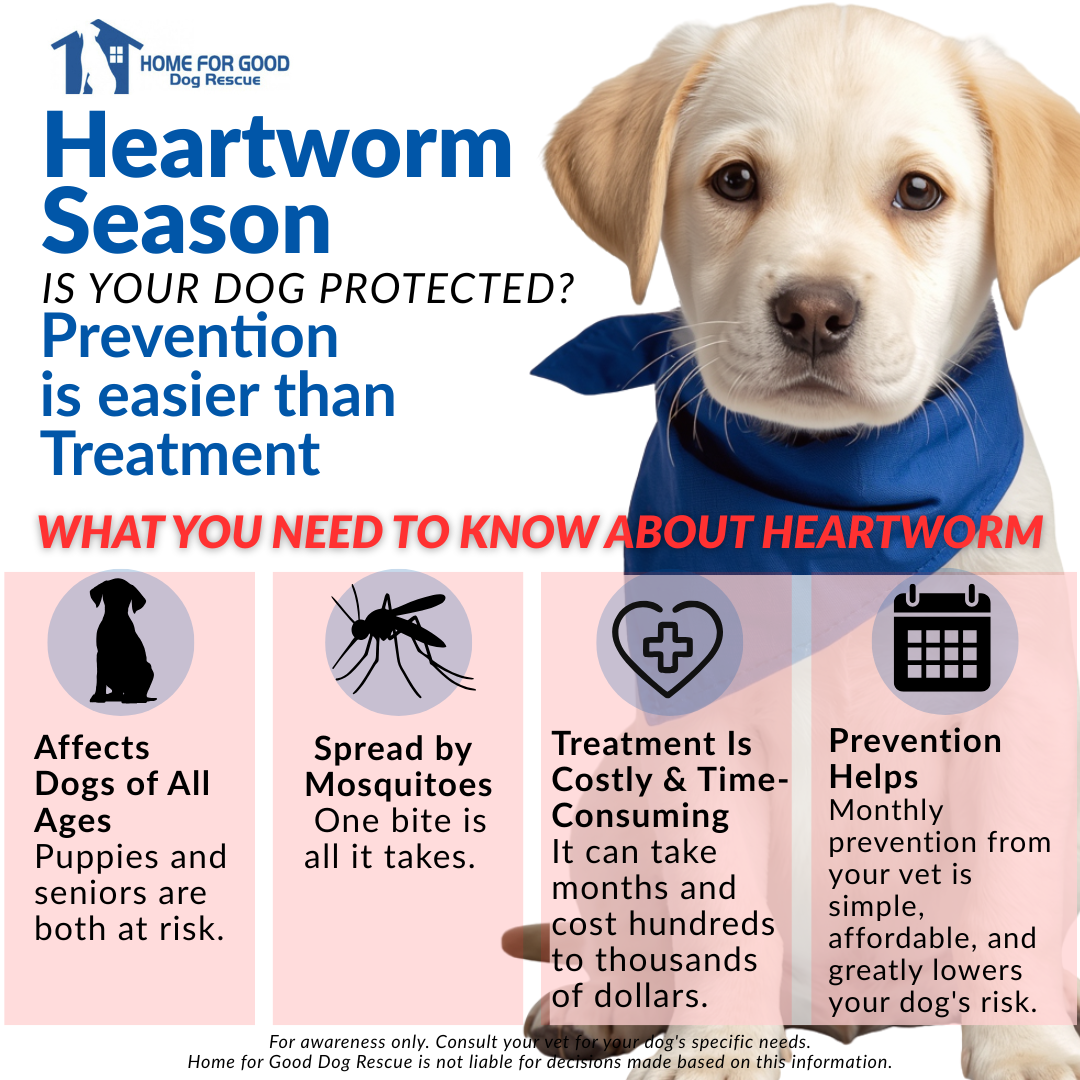
Heartworm disease starts small. A mosquito bites an infected animal and picks up microscopic larvae. Then it passes those larvae to the next dog it bites. Over several months, the larvae grow into worms that live in the heart, lungs, and blood vessels. Left untreated, heartworm disease causes permanent organ damage and can be fatal.
The scary part is how quiet it is early on. Dogs often show no symptoms until the disease has progressed. So by the time a cough or fatigue shows up, real damage has already been done.
Why Shelters and Rescues See This Often
Heartworm-positive dogs show up in shelters and rescues everywhere, including here at Home for Good Dog Rescue. Treatment takes months of restricted activity and follow-up vet visits. As a result, these dogs often need extra recovery time before they’re ready for adoption. In shelters without the resources to cover that timeline, heartworm-positive dogs face a higher risk. The disease is treatable — but treatment takes time and money that isn’t always available.
Prevention sidesteps all of it. A monthly preventative costs a small fraction of what treatment costs, and it takes seconds to give. Treatment, by comparison, requires strict activity restriction and multiple vet visits. Costs can run into the hundreds or even thousands of dollars, depending on the dog’s size and stage of infection.
Prevention is simple. Treatment is not. That gap is why heartworm prevention matters so much.
What Prevention Actually Looks Like
Most heartworm preventatives come as a monthly chewable, a topical, or an injectable your vet gives a few times a year. They’re widely available and simple to use. They work by killing larvae before those larvae mature into adult worms.
A few things worth knowing:
- Preventatives only work moving forward — they don’t treat an existing infection.
- Vets recommend a heartworm test before starting or restarting a preventative, since giving it to an already-infected dog can cause a dangerous reaction.
- Consistency matters. A missed month creates a window of risk.
Don’t Forget the Rest of the Checklist
While you’re thinking about heartworm, it’s also a good time to check your dog’s vaccination schedule. Rabies, distemper, parvovirus, and bordetella are all part of the standard lineup. Your vet can confirm exactly what’s due based on your dog’s age, lifestyle, and location.
Talk to Your Vet
Every dog is different. Only your veterinarian can recommend the right preventative, dosage, and vaccination schedule for your dog. This article is for general awareness only and isn’t a substitute for professional veterinary guidance. Home for Good Dog Rescue isn’t liable for any decisions made based on this article. If your dog hasn’t been tested or started on a preventative, a quick call to your vet is the best next step.


